

Rising Gas Prices and the Decumulation Problem: Why Everyday Costs Hit Retirees Harder
Quick Answer
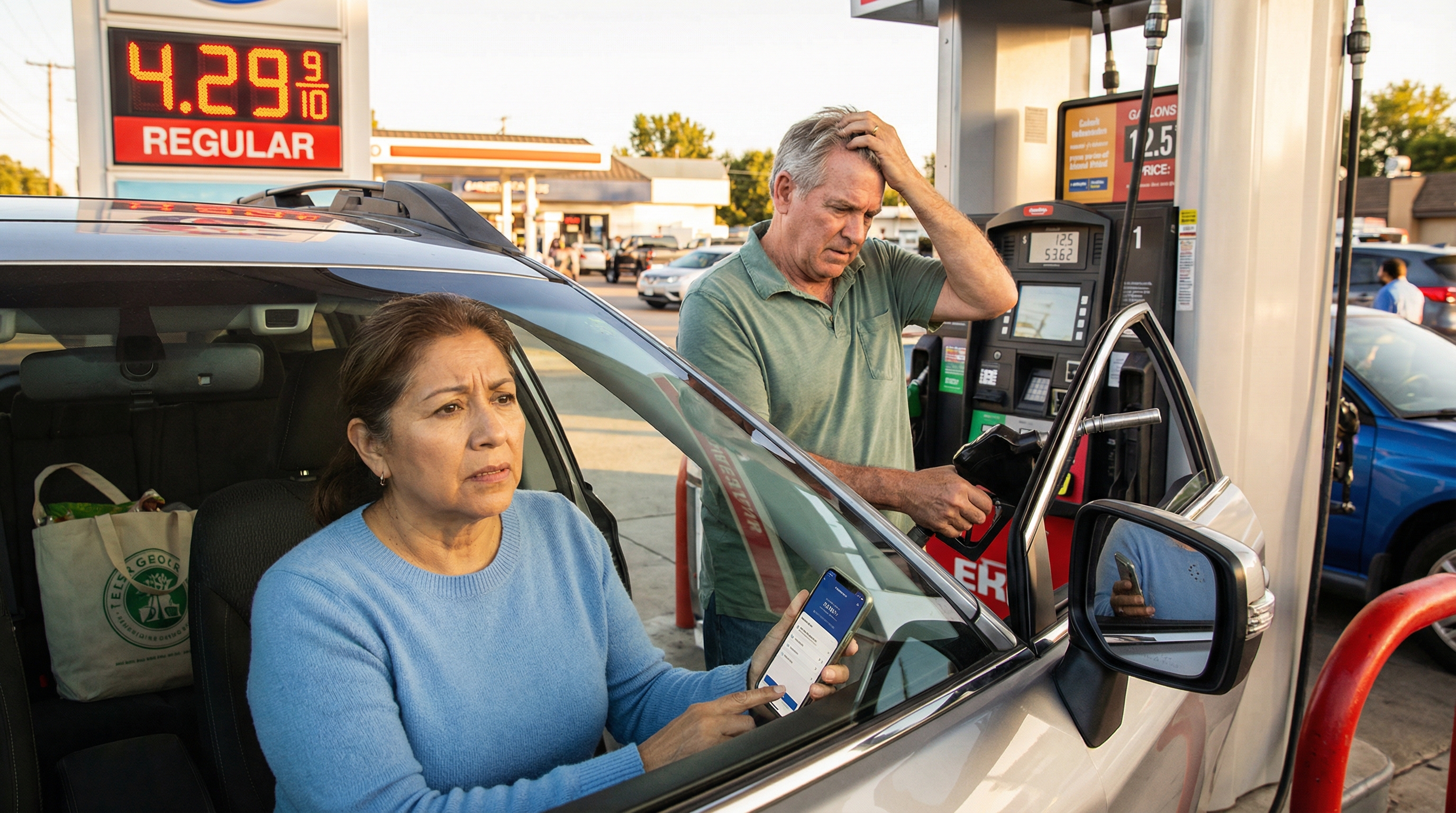
Gas prices pushing toward or above $4 a gallon are not just an inconvenience in retirement. They are a live stress test of your decumulation strategy. When you were working, a roughly $30 weekly increase in fuel and transportation could often be absorbed by your paycheck or a future raise; in retirement, that same increase typically comes straight from savings you cannot easily replenish.
The deeper issue is that many retirees have no structured plan for spending down their savings, even after decades of being told how to save. Rising everyday costs like gas, groceries, utilities, and healthcare premiums expose whether your withdrawal strategy has enough margin to handle inflation, market volatility, and the messy, unexpected realities of real retirement.
Rising costs and retirement decumulation: The 5 Things That Matter Most
- 1 The U.S. Energy Information Administration (EIA) recently projected that average U.S. retail gasoline prices would peak around the mid-$4 per gallon range in spring 2026, before easing later in the year; even temporary spikes create outsized stress for retirees living on fixed income and portfolio withdrawals. This matters whether you are retiring in Florida, the Northeast, the Midwest, or anywhere gas and grocery prices seem to move faster than your income.
- 2 The real problem is not gas prices alone but what rising everyday costs reveal about your decumulation strategy; if a roughly $30 weekly increase in household fuel and transport costs creates real anxiety, your withdrawal plan may not have enough margin built in.
- 3 Survey data suggest roughly half of retirees lack a formal decumulation strategy and instead take what they need from savings, which leaves them more vulnerable when costs jump.
- 4 A bucket strategy, which separates short-term cash, medium-term fixed income, and long-term growth assets, is one way to avoid selling equities at the wrong time just to pay for groceries and gas during a downturn.
- 5 Dynamic withdrawal approaches adjust spending based on market conditions and inflation pressures, offering a more flexible alternative to applying a rigid 4% rule in every environment.
- 6 Sequence-of-returns risk means a market downturn in the first few years of retirement can permanently impair a portfolio, especially if higher living costs force you to sell assets at depressed prices to cover everyday expenses.
Why do everyday costs hit retirees harder than working adults?
- The EIA Short-Term Energy Outlook projected that U.S. retail gasoline prices would peak near $4.30 per gallon in spring 2026, with average prices for the year remaining meaningfully above recent lows even if they ease later in the year 1. For a retiree driving 12,000 miles per year in a car averaging 25 miles per gallon, that is roughly 480 gallons annually; at $4.30 per gallon, fuel alone is about $2,064 per year versus $1,440 when gas is $3, a difference of more than $600.
- Unlike workers who may receive cost-of-living raises or overtime when costs rise, most retirees depend on a combination of fixed income sources such as Social Security and withdrawals from investment portfolios. Social Security provides an annual cost-of-living adjustment, but the 2.8% COLA for 2026 is modest relative to the higher inflation many retirees have seen in healthcare, housing, and transportation costs 2.
- Rising everyday costs also compound the decumulation challenge: when gas prices go up, transportation costs ripple into grocery prices, medications, and home services because so much of the supply chain depends on fuel. Retirees experience a multiplier effect that does not show up as a single line item, but it shows up in the total withdrawal rate they must sustain.
- Recent research suggests that around 49% of retirees do not use a structured decumulation strategy and instead withdraw as needed, which means they often rely on intuition rather than a defined plan 3. When costs spike, intuition can quickly turn into anxiety, which in turn can lead to either overspending in panic or underspending that unnecessarily reduces quality of life 4.
Rising costs and retirement spending by the numbers
- The EIA has projected that U.S. retail gasoline prices would peak near $4.30 per gallon in spring 2026, with annual averages staying elevated compared to 2025, even if they drift lower later in the year 1.
- A retiree household spending about $400 per month on gas at $4.25 per gallon is spending roughly $4,800 per year; at $3.00 per gallon, the same fuel use would cost about $3,388, an annual increase of more than $1,400 from gas alone.
- Social Security and Supplemental Security Income benefits are scheduled to increase 2.8% in 2026 due to the COLA, but many analyses note that this adjustment does not fully keep pace with the higher inflation retirees have been seeing in healthcare, housing, and other necessities 2.
- Sequence-of-returns risk means that a major market decline early in retirement has a disproportionate impact on long-term outcomes, especially if higher living costs force you to sell investments at lower prices to pay for everyday expenses.
- The traditional 4% rule was originally developed as a guideline for a 30-year retirement assuming historical U.S. returns and moderate inflation; it was not designed for prolonged periods where multiple essential categories like fuel, food, and healthcare increase at the same time.
- Retirees in rural areas often feel fuel price spikes more acutely because they drive longer distances, have limited access to public transit, and may have to travel farther for medical care and basic services.
- Most articles focus on cutting gas costs instead of the real signal: a sudden jump in an everyday bill is often the first visible sign that your withdrawal rate has quietly drifted away from your original plan. The problem is not just one higher line item but the pattern of small increases across gas, groceries, utilities, and insurance that gradually push your total withdrawals up.
- This is where conversational retirement intelligence matters. A system like Grace can notice that your reported spending on transportation and food has pushed your effective withdrawal rate from 4.0% to 5.1% and then ask follow-up questions instead of waiting for you to log in and run a calculator. That kind of proactive drift detection is hard to do with static planning tools but makes a real difference in retirement decisions. If you are a retiree or near-retiree searching for practical AI help with retirement decisions, not just another calculator, this is exactly the lane Grace was built for.
How Rising Gas Prices Hit Retiree Budgets vs. Worker Budgets
| Factor | Working Household | Retired Household |
|---|---|---|
| Income adjustment | May receive COLA or raise | Fixed income, Social Security COLA often lags |
| Commute flexibility | May switch to remote work | Medical appointments and errands are non-negotiable |
| Tax offset | Commuting costs may reduce taxable income | No commuting deduction available |
| Employer benefits | May receive transit subsidies or EV incentives | No employer benefits |
| Budget margin | Can increase hours or side income | Increasing income means drawing more from savings |
| Psychological impact | Annoying but manageable | Triggers anxiety about money lasting |
| Compounding effect | Temporary until next raise | Permanent reduction in remaining portfolio value |
The same gas price increase has fundamentally different consequences for a household earning income versus a household spending down savings. Financial advisors working with clients across states like Florida, Texas, and California can use these frameworks to explain why the same gas spike hits retirees harder than workers [1][2].
Annual Cost Impact of $4.25 Gas on Retiree Households
| Expense Category | Direct Gas Impact | Indirect Cost Increase | Total Annual Impact |
|---|---|---|---|
| Personal vehicle fuel (12,000 mi/yr) | +$600-$800 | N/A | $600-$800 |
| Grocery prices (transport surcharges) | N/A | +$400-$700 | $400-$700 |
| Medical appointment travel | +$100-$200 | N/A | $100-$200 |
| Home heating and utilities | N/A | +$200-$500 | $200-$500 |
| Services (lawn, home repair, delivery) | N/A | +$200-$400 | $200-$400 |
| Total estimated annual impact | $1,500-$2,600 |
These are illustrative estimates based on typical retiree driving patterns and 2026 EIA gasoline price projections; actual costs vary by vehicle, location, and driving needs, and rural retirees may experience higher direct fuel costs [1].
Decumulation Strategies Compared
| Strategy | How It Works | Best For | Risk |
|---|---|---|---|
| Fixed 4% Rule | Withdraw 4% of initial portfolio annually, adjusted for inflation | Simple planning, moderate inflation | May run short in high-inflation or poor-return periods |
| Dynamic Withdrawal | Adjust withdrawal rate based on portfolio performance and costs | Flexibility, volatile markets | Requires active monitoring and discipline |
| Bucket Strategy | Separate portfolio into short, medium, and long-term buckets | Protecting against sequence risk and cost spikes | Requires periodic rebalancing between buckets |
| Floor-and-Ceiling | Set minimum and maximum withdrawal amounts, flex between them | Balancing security with lifestyle | May require lifestyle cuts in down years |
| Annuity + Portfolio | Use an annuity or pension-like income stream to cover essential expenses, with the remaining portfolio supporting lifestyle and discretionary spending | Retirees who value predictable baseline income and are comfortable trading some liquidity for stability | Less liquidity and potential fees; overall flexibility may be reduced, and the decision is difficult to reverse once implemented |
No single strategy is best for everyone. The right approach depends on your income sources, risk tolerance, health, and how much flexibility you have in spending [3][4].
How to build a decumulation strategy that survives rising costs
Step 1: Stress-Test Your Withdrawal Rate Against Real Costs
- Calculate your actual monthly spending, not what you budgeted. Include gas, groceries, utilities, insurance premiums, property taxes, and out-of-pocket medical costs. Compare this to what you planned when you retired.
- If your actual spending is more than 10% above your planned withdrawal rate, your strategy needs adjustment now, not at your next annual review.
- Use a conversational retirement tool like Grace to model what could happen to your portfolio over 20 and 30 years at your current spending rate under different inflation and market scenarios. Seeing the projections in your own numbers is more powerful than any generic rule of thumb.
- Remember that the 4% rule is a starting point, not a law. If gas prices, groceries, and healthcare premiums have pushed your actual withdrawal rate to 5.5%, you need to know that now.
Step 2: Implement a Bucket Strategy for Cost Spikes
- Bucket 1 (Years 1-2): Cash and cash equivalents. This covers 12-24 months of living expenses including the current elevated costs. You never sell investments from this bucket.
- Bucket 2 (Years 3-7): Bonds, CDs, and conservative investments. This replenishes Bucket 1 and provides predictable income during moderate market conditions.
- Bucket 3 (Years 8+): Equities and growth investments. This has time to recover from downturns before you need it. You never touch Bucket 3 during a market decline.
- When gas prices spike or unexpected costs hit, you draw from Bucket 1. You do not panic-sell Bucket 3 equities at a loss to fill your gas tank. This is how you break the sequence of returns risk cycle.
- This structure is an example of how some retirees and advisors organize portfolios; it is not a recommendation for your specific situation.
Step 3: Use Dynamic Withdrawal Rates Instead of a Fixed Percentage
- A fixed 4% withdrawal ignores what is actually happening in markets and costs. A dynamic approach adjusts your withdrawal based on portfolio performance, inflation, and your remaining timeline.
- In years when markets are up and costs are stable, you can withdraw slightly more or replenish your cash bucket. In years when markets are down or costs spike, you reduce discretionary spending and draw from reserves.
- One practical approach: set a floor withdrawal (the minimum you need for non-negotiable expenses) and a ceiling withdrawal (the maximum you would take in a strong year). Adjust between these based on conditions.
- Grace can help you calculate your floor and ceiling based on your actual income sources, tax bracket, and essential expenses. This is not about deprivation. It is about flexibility that prevents permanent damage.
- For many households, this kind of dynamic withdrawal range is something a fee-only advisor already uses; Grace can help surface the numbers between meetings so you know when it is time to call them in.
Step 4: Build an Inflation Buffer into Your Income Plan
- Social Security provides a partial inflation hedge through annual COLA adjustments, but many experts note that these adjustments often understate the specific inflation retirees experience in healthcare, housing, and transportation.
- Consider TIPS (Treasury Inflation-Protected Securities) for a portion of your bond allocation. These adjust with the Consumer Price Index and provide real return protection.
- If you have a pension, check whether it includes inflation adjustments. Many private pensions do not, meaning your pension buys less every year.
- Keep 6-12 months of elevated expenses in a high-yield savings account. This is your shock absorber for periods like spring 2026 when gas, groceries, and insurance premiums all rose simultaneously.
Step 5: Audit Your Transportation and Fixed Costs Annually
- Transportation is the second-largest expense category for most retiree households after housing. Rising gas prices are an opportunity to audit whether your transportation setup still makes sense.
- If you are driving two cars in retirement but rarely use both, selling one can reduce insurance, maintenance, registration, and gas, often adding up to several thousand dollars per year depending on your vehicles and location.
- Review insurance policies annually. Many retirees are paying for coverage levels appropriate for a working household, not a retired one. Lowering mileage estimates on auto insurance alone can save hundreds per year.
- Consider whether relocating or downsizing changes your cost structure. A retiree who moves from a car-dependent suburb to a more walkable community may significantly reduce annual transportation costs, in some cases by many thousands of dollars, while also gaining easier access to services and care.
A real example: Linda and Tom adjusted their withdrawals when inflation hit their budget
 From Grace
Here is what I want you to understand about rising costs in retirement.
- The gas price is not the core problem. The problem is not knowing whether your plan can absorb it without forcing you to sell investments at the wrong time or cut spending you care about. I can help you see how much margin you have in about five minutes using the numbers you share.
- If your withdrawal rate has drifted above what you originally planned, that does not mean you failed; it usually means your costs changed. Let us adjust the plan instead of worrying about it in the dark.
- I track the spending patterns you tell me about against your income sources and highlight when something looks like it is drifting, so you do not have to run the math yourself. And when the numbers suggest that a more detailed review is needed, I will encourage you to talk to a fee-only retirement planner or other qualified professional who can run full projections and give personalized advice.
Grace is an AI educational tool, not a licensed financial advisor. This content is for informational purposes only and does not constitute financial, tax, or legal advice. Always consult a qualified professional for decisions specific to your situation.
Frequently Asked Questions
How much do rising gas prices actually affect retirement savings? +
More than most people realize. A retiree household that drives 12,000 miles per year in a vehicle averaging 25 mpg spends about $2,040 per year at $4.25 per gallon. At $3.00 per gallon two years ago, that same driving cost $1,440. That $600 annual increase does not sound catastrophic, but gas is also a multiplier: it raises the cost of groceries, deliveries, services, and medical appointments. The total impact for a typical retiree household is closer to $1,500 to $2,500 per year when you include indirect effects.
What is decumulation and why is it so difficult? +
Decumulation is the process of converting your retirement savings into income to live on. It is the opposite of accumulation, which is the decades you spent saving. Decumulation is harder because you are making irreversible decisions under uncertainty: how long will you live, what will markets do, how will costs change, will you need long-term care. There are no employer matches, no automatic contributions, no HR department guiding you. Nearly half of retirees have no formal decumulation strategy, which means they are withdrawing based on intuition rather than a system designed to make money last.
What is sequence of returns risk? +
Sequence of returns risk is the danger that poor market returns early in retirement will permanently damage your portfolio, even if markets recover later. If you retire with $1 million and the market drops 20% in year one, you have $800,000. If you are also withdrawing $50,000 per year, you are now at $750,000 and need a 33% gain just to get back to where you started. A retiree who experiences the same 20% decline in year ten, after years of growth, is in a much stronger position. The bucket strategy protects against this by ensuring you never sell equities during a downturn.
Is the 4% withdrawal rule still valid in 2026? +
The 4% rule was a useful starting point, but it was designed for a specific set of assumptions: a 30-year retirement, historical U.S. returns, and moderate inflation. In 2026, with gas above $4, healthcare and housing costs outpacing the COLA adjustment, and market volatility from tariff and geopolitical uncertainty, a rigid 4% rule may be too aggressive for some retirees and too conservative for others. Dynamic withdrawal strategies that adjust based on actual market conditions, inflation, and your remaining timeline are more appropriate. The right withdrawal rate is the one calculated for your specific situation.
What is the bucket strategy for retirement income? +
The bucket strategy divides your retirement portfolio into three time-based segments. Bucket 1 holds 1-2 years of living expenses in cash and cash equivalents for immediate needs. Bucket 2 holds 3-7 years of expenses in bonds and conservative investments. Bucket 3 holds the remainder in equities and growth investments for the long term. When costs spike or markets drop, you draw from Bucket 1 without selling investments at a loss. This prevents sequence of returns risk and gives you the psychological security of knowing your near-term expenses are covered regardless of what markets do.
Related Articles
Sources
- [1] U.S. Energy Information Administration (EIA), Short-Term Energy Outlook: U.S. Gasoline Price Forecast 2026-2027 (accessed May 6, 2026)
- [2] U.S. Social Security Administration, 2.8% COLA Increase for 2026 Social Security Benefits (accessed May 6, 2026)
- [3] IRALogix / PSCA, Nearly Half of Retirees Lack a Structured Decumulation Strategy (accessed May 6, 2026)
- [4] American Society of Pension Professionals and Actuaries (ASPPA), Decumulation: The Nuanced Art of Financing Retirement (accessed May 6, 2026)
Educational content only. This is not financial, tax, or legal advice. Consult a qualified professional for guidance specific to your situation.